Understanding the Great Migration
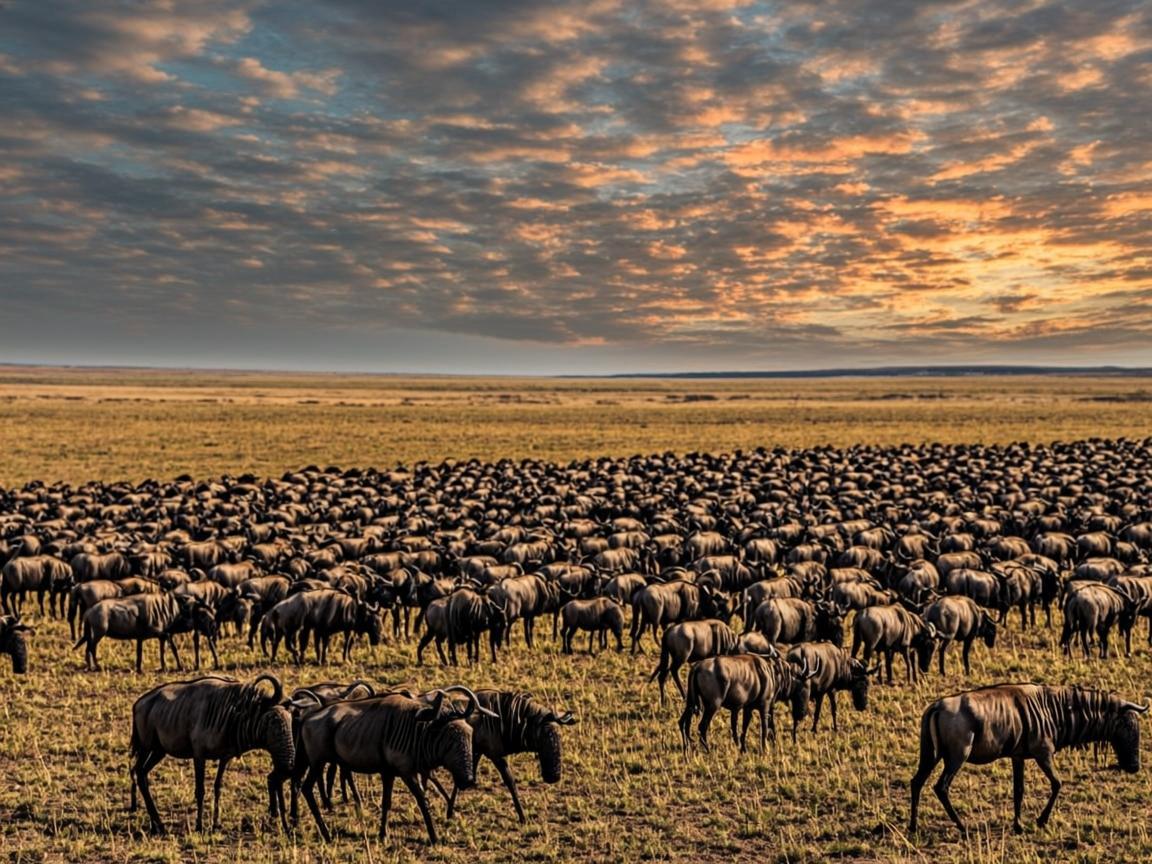
The Great Migration is often described as the greatest wildlife spectacle on Earth, and for good reason. Over 1.5 million wildebeest, 200,000 zebra, and 350,000 gazelle traverse the Serengeti-Mara ecosystem in a relentless, clockwise cycle driven by the search for fresh grazing and water. Understanding the rhythm of this ancient movement is key to planning your trip.
January to March — Calving Season in the Southern Serengeti
The herds gather on the short-grass plains of the southern Serengeti and Ndutu region. This is calving season, when approximately 500,000 wildebeest are born over a three-week period in February. The sheer density of animals attracts big cats, creating dramatic predator-prey interactions. The green season landscape is lush and photogenic, with dramatic skies and fewer visitors than later in the year.
April to May — The Long Trek Begins
As the southern plains dry out, the herds begin their long trek north and west in columns that can stretch for dozens of kilometers. This is the greenest time of year in the Serengeti, with wildflowers blooming across the plains. While rain is more frequent, it typically falls in short afternoon showers that clear quickly, leaving dramatic skies for photography.
June to July — Western Corridor and Grumeti River
The migration reaches the western corridor, where the herds must cross the Grumeti River. These crossings are less crowded than the Mara River but equally dramatic. Huge Nile crocodiles lurk in the deep channels, and the riverbanks become a stage for one of nature's most intense survival challenges. This period also sees the herds starting to move into the central Serengeti.
August to October — The Mara River Crossings
This is the peak season and the time most people associate with the Great Migration. The herds reach the northern Serengeti and must cross the Mara River — a terrifying gauntlet of fast-flowing water, steep banks, and enormous crocodiles. The crossings are unpredictable and can happen at any time, with hundreds of thousands of animals gathering on the riverbank before making the plunge. It is raw, visceral, and unforgettable.
November to December — The Return South
As short rains return to the southern Serengeti, the herds begin their journey back. The migration spreads out across the eastern and central Serengeti, and the landscape transforms with the first rains. This is a peaceful time to visit — fewer tourists, green landscapes, and the herds moving at a more relaxed pace. It is an excellent choice for photographers who prefer softer light and uncrowded sightings.
Our Recommendation
There is no single "best" time — each phase offers something unique. For calving and predator action, visit February-March. For river crossings, plan for August-October. For lush scenery and fewer crowds, November-January is ideal. Our team can position you in the right part of the Serengeti at the right time to maximize your experience.